Sump pumps
Can a power station run a sump pump?
Often, for a 1/3 hp pump, if the station can start it. How long it lasts depends on how often the pump runs: about 8.5 h on a 1,000 Wh station if it runs 30 seconds every 4 minutes (an example cycle), about 1.1 h if it runs nonstop.
Hours on each station, 1/3 hp pump
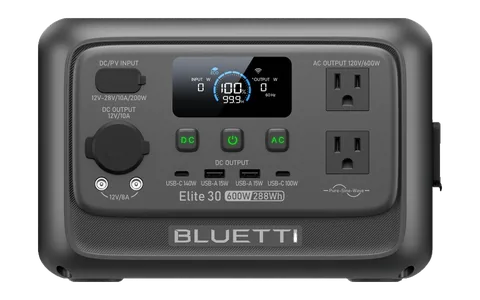
BLUETTI Elite 30 V2
Can’t run it 1/3 hp, 800 W: more than its 600 W output
BLUETTI price, Oct 23
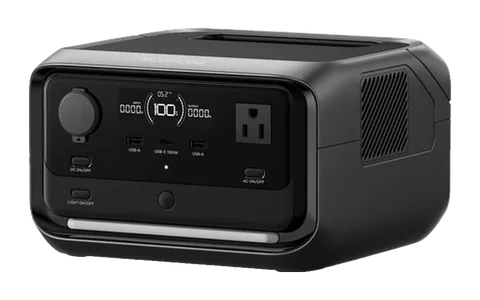
Check price at BLUETTI for the BLUETTI Elite 30 V2Paid linkEcoFlow RIVER 3 Plus
Can’t run it 1/3 hp, 800 W: more than its 600 W output
EcoFlow price, Oct 23
Check price at EcoFlow for the EcoFlow RIVER 3 PlusPaid linkBLUETTI AC180
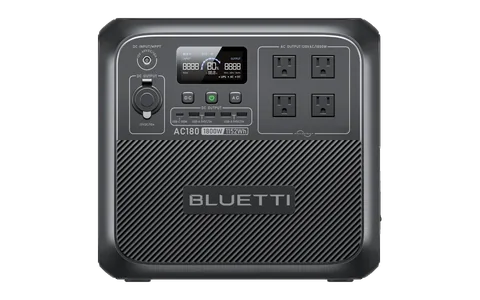
8.5 h 1/3 hp, example cycle
Nonstop: 1.2 h · 1/2 hp nonstop: 55 min, start may be tight
BLUETTI price, Oct 23
Check price at BLUETTI for the BLUETTI AC180Paid linkBLUETTI Elite 100 V2
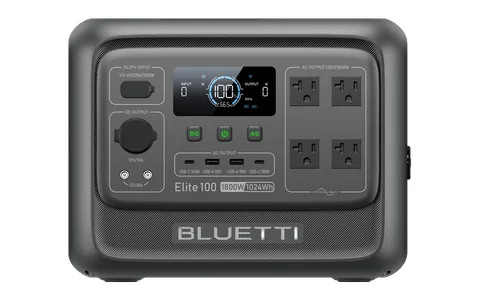
7.9 h 1/3 hp, example cycle · start may be tight
Nonstop: 1.1 h · 1/2 hp nonstop: may not start
BLUETTI price, Oct 23
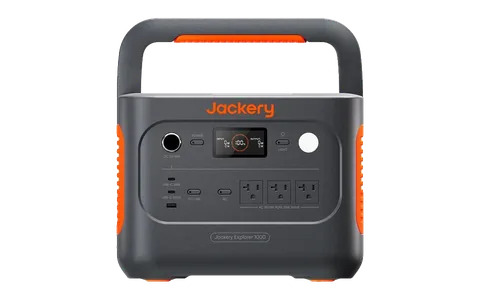
Check price at BLUETTI for the BLUETTI Elite 100 V2Paid linkJackery Explorer 1000 v2
9.1 h 1/3 hp, example cycle
Nonstop: 1.1 h · 1/2 hp nonstop: 52 min, start may be tight
Jackery price, Oct 23
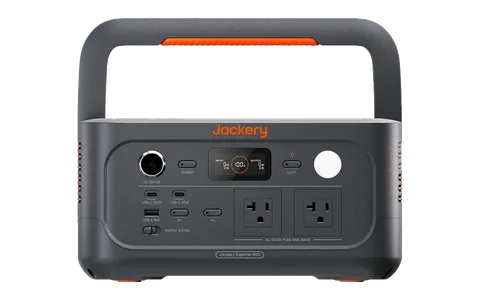
See it at Jackery for the Jackery Explorer 1000 v2Jackery Explorer 600 v2
Can’t run it 1/3 hp, 800 W: more than its 500 W output
Jackery price, Oct 23
Anker SOLIX C1000 Gen 2
8.7 h 1/3 hp, example cycle
Nonstop: 1.1 h · 1/2 hp nonstop: 50 min, start may be tight
Anker price, Oct 23
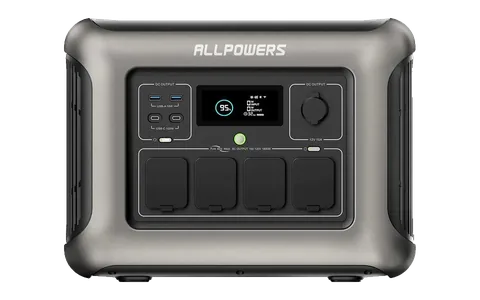
See it at Anker for the Anker SOLIX C1000 Gen 2ALLPOWERS R1500
9.8 h 1/3 hp, example cycle
Nonstop: 1.2 h · 1/2 hp nonstop: 56 min, start may be tight
ALLPOWERS price, Oct 23
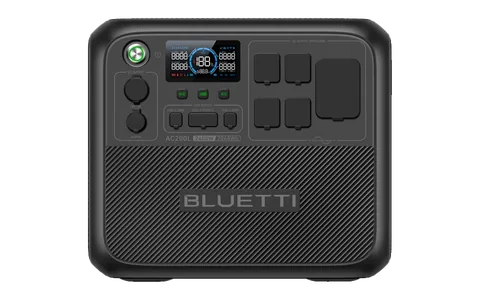
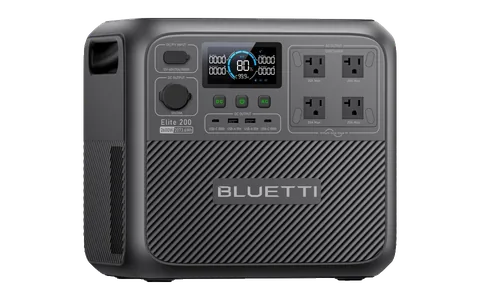
Check price at ALLPOWERS for the ALLPOWERS R1500Paid linkBLUETTI AC200L
15.5 h 1/3 hp, example cycle
Nonstop: 2.1 h · 1/2 hp nonstop: 1.6 h
BLUETTI price, Oct 23
Check price at BLUETTI for the BLUETTI AC200LPaid linkBLUETTI Elite 200 V2
16 h 1/3 hp, example cycle
Nonstop: 2.2 h · 1/2 hp nonstop: 1.7 h, start may be tight
BLUETTI price, Oct 23
Check price at BLUETTI for the BLUETTI Elite 200 V2Paid linkJackery Explorer 2000 v2
17.4 h 1/3 hp, example cycle
Nonstop: 2.2 h · 1/2 hp nonstop: 1.7 h
Jackery price, Oct 23
See it at Jackery for the Jackery Explorer 2000 v2Anker SOLIX C2000 Gen 2
16 h 1/3 hp, example cycle
Nonstop: 2.2 h · 1/2 hp nonstop: 1.6 h
Anker price, Oct 23
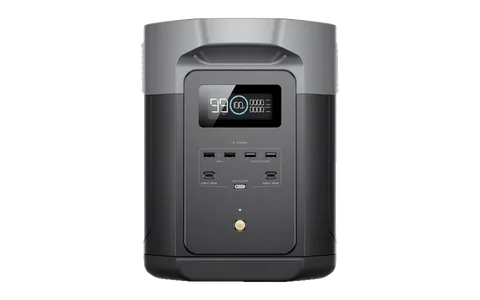
See it at Anker for the Anker SOLIX C2000 Gen 2EcoFlow DELTA 2 Max
17.4 h 1/3 hp, example cycle
Nonstop: 2.2 h · 1/2 hp nonstop: 1.7 h
EcoFlow price, Oct 23
Check price at EcoFlow for the EcoFlow DELTA 2 MaxPaid linkEcoFlow DELTA 3 Max Plus
17.4 h 1/3 hp, example cycle
Nonstop: 2.2 h · 1/2 hp nonstop: 1.7 h
EcoFlow price, Oct 23
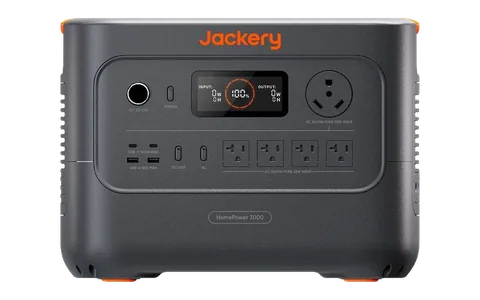
Check price at EcoFlow for the EcoFlow DELTA 3 Max PlusPaid linkJackery HomePower 3000
26.1 h 1/3 hp, example cycle
Nonstop: 3.3 h · 1/2 hp nonstop: 2.5 h
Jackery price, Oct 23
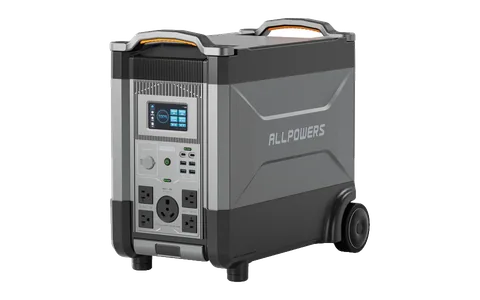
See it at Jackery for the Jackery HomePower 3000ALLPOWERS R4000
29.4 h 1/3 hp, example cycle
Nonstop: 3.7 h · 1/2 hp nonstop: 2.8 h
ALLPOWERS price, Oct 23
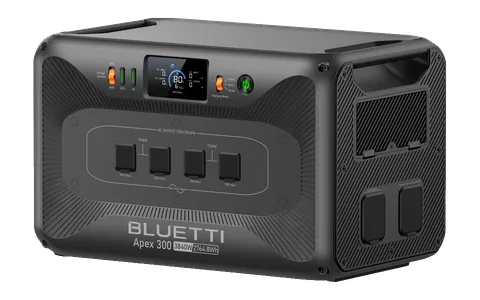
Check price at ALLPOWERS for the ALLPOWERS R4000Paid linkBLUETTI Apex 300
19.6 h 1/3 hp, example cycle
Nonstop: 2.9 h · 1/2 hp nonstop: 2.2 h
BLUETTI price, Oct 23
Check price at BLUETTI for the BLUETTI Apex 300Paid linkAnker SOLIX S5000
42.7 h 1/3 hp, example cycle
Nonstop: 5.3 h · 1/2 hp nonstop: 4.1 h
Anker price, Oct 23
See it at Anker for the Anker SOLIX S5000
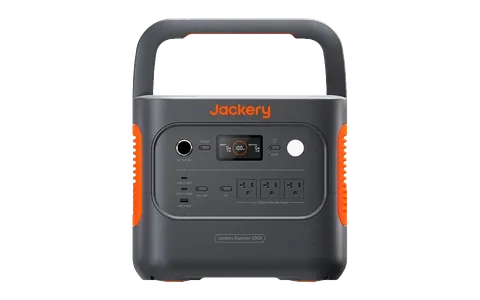
Wh × 0.85 ÷ watts. Example cycle: 30 s every 4 min, 100 W averaged; yours depends on how fast water comes in. “May not start”: the station’s surge, or its output if none is listed, is below the lower starting figure in generator charts. “Start may be tight”: it covers the lower starting figure but not the higher one. Maker prices, Oct 23, 2026, unless dated. Checkout price applies. Photos: the makers. Cards marked “Illustration” use our own drawing where we have no photo.
See every number in a table
| Station | Output | Surge | 1/3 hp nonstop, 800 W | 1/3 hp, example cycle | 1/2 hp nonstop, 1,050 W |
|---|---|---|---|---|---|
| EcoFlow RIVER 3 Plus | 600 W | 1,200 W | Output too low | Output too low | Output too low |
| BLUETTI Elite 30 V2 | 600 W | not listed | Output too low | Output too low | Output too low |
| Jackery Explorer 600 v2 (sold out) | 500 W | 1,000 W | Output too low | Output too low | Output too low |
| Anker SOLIX C1000 Gen 2 | 2,000 W | 3,000 W | 1.1 h | 8.7 h | 50 min * |
| BLUETTI Elite 100 V2 (ships Nov 12) | 1,800 W | not listed | 1.1 h * | 7.9 h * | May not start |
| Jackery Explorer 1000 v2 | 1,500 W | 3,000 W | 1.1 h | 9.1 h | 52 min * |
| BLUETTI AC180 | 1,800 W | 2,700 W | 1.2 h | 8.5 h | 55 min * |
| ALLPOWERS R1500 | 1,800 W | 3,000 W | 1.2 h | 9.8 h | 56 min * |
| Jackery Explorer 2000 v2 | 2,200 W | 4,400 W | 2.2 h | 17.4 h | 1.7 h |
| EcoFlow DELTA 3 Max Plus | 3,000 W | 6,000 W | 2.2 h | 17.4 h | 1.7 h |
| Anker SOLIX C2000 Gen 2 | 2,400 W | 4,000 W | 2.2 h | 16 h | 1.6 h |
| BLUETTI AC200L | 2,400 W | 4,800 W | 2.1 h | 15.5 h | 1.6 h |
| EcoFlow DELTA 2 Max | 2,400 W | 4,800 W | 2.2 h | 17.4 h | 1.7 h |
| BLUETTI Elite 200 V2 | 2,600 W | not listed | 2.2 h | 16 h | 1.7 h * |
| BLUETTI Apex 300 | 3,840 W | not listed | 2.9 h | 19.6 h | 2.2 h |
| Jackery HomePower 3000 | 3,600 W | 7,200 W | 3.3 h | 26.1 h | 2.5 h |
| ALLPOWERS R4000 | 3,600 W | 6,000 W | 3.7 h | 29.4 h | 2.8 h |
| Anker SOLIX S5000 (available Oct 27) | 4,500 W | 8,000 W | 5.3 h | 42.7 h | 4.1 h |
Wh × 0.85 ÷ watts. Example cycle: 30 s every 4 min, 100 W averaged; yours depends on how fast water comes in. “May not start”: the station’s surge, or its output if none is listed, is below the lower starting figure in generator charts. * Covers the lower starting figure but not the higher one. Rows include each station’s own draw where the maker lists it (BLUETTI Elite 30 V2 9 W, Elite 100 V2 10 W, AC180 15 W, AC200L 12 W, Elite 200 V2 10 W, Apex 300 20 W; Anker SOLIX C2000 Gen 2 9 W).
What a sump pump draws
Pump makers list amps, not watts: Liberty’s 1/3 hp model 257 draws 5.2 A at 115 V (Liberty). Generator makers’ charts give the planning figures: about 750–800 W running for 1/3 hp and about 1,000–1,050 W for 1/2 hp (EWEB chart) (Honda).
Starting it
The motor needs a burst to start. Honda’s chart lists 1,500 W in total to start a 1/3 hp pump and 2,100 W for 1/2 hp (Honda). Another chart lists starting watts on top of running power: 1,300 W more for 1/3 hp, about 2,100 W in total, and 2,200 W more for 1/2 hp, about 3,250 W in total (EWEB). Plan for the higher figure. A station with no listed surge rating may not start the pump at all.
How often it runs
That decides the hours, and it depends on how fast water comes in. Our example cycle, 30 seconds every four minutes, is borrowed from an NDSU Extension test of a 12 V backup pump at a set inflow; it isn’t a typical rate for every basement. In heavy rain, NDSU notes, a sump pump might run for a couple of hours straight (NDSU). NDSU also notes that a 1,500 W generator can run the main pump and a backup pump’s battery charger, and describes battery backup pumps made for the job.
Water and electricity: keep the station dry and above any flood level, and follow the pump maker’s instructions.
Quick answers
Can a 1,000 Wh power station run a sump pump?
A 1/3 hp pump, if the station’s output and surge cover it: about 1.1 h of nonstop pumping, or about 8.5 h if it runs 30 seconds every 4 minutes. How often it runs depends on the water.
What surge do I need for a sump pump?
Generator charts put the start of a 1/3 hp pump at about 1,500–2,100 W in total and a 1/2 hp pump at about 2,100–3,250 W. Check your pump’s label and the station’s surge rating.
“Paid link” = we earn a commission. Same math either way. See how we make money.